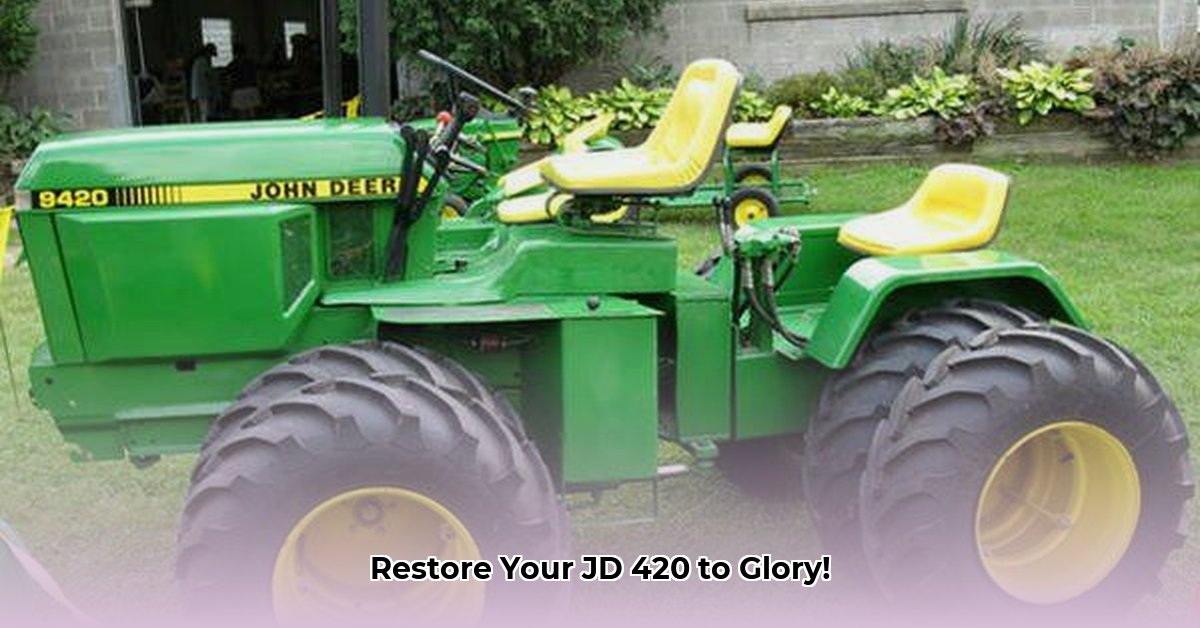
The John Deere 420 lawn tractor, a stalwart of the 1980s and early 1990s, remains a popular choice among enthusiasts and practical users alike. This comprehensive guide delves into its history, technical specifications, operation, maintenance, restoration, and market value, providing a complete resource for collectors, potential buyers, and those seeking to maintain this classic machine. For information on tire replacement, see this helpful guide: tire replacement.
A Legacy of Power and Reliability: The John Deere 420
Introduced between 1983 and 1991, the JD 420 wasn't simply another lawn tractor; it was a significant step forward in home lawn care technology. Its robust Onan engine (typically around 20 horsepower) and smooth hydrostatic transmission offered a combination of power and ease of use that set it apart. But what exactly made it so special? Let's explore its history and key features.
A Look Back: Historical Context and Innovation
The 420's arrival coincided with a boom in home lawn care, and it answered a growing demand for more powerful and user-friendly equipment. Its design incorporated significant advancements for its time, including the reliable Onan engine and a user-friendly hydrostatic transmission, features that continue to impress even today. This wasn't just a machine; it was a symbol of efficient yard work. Did you know that the demand for reliable lawn tractors fueled the development of many key engine and transmission technologies?
Under the Hood: Technical Specifications of the JD 420
Understanding the JD 420's specifications provides a foundation for maintenance, repair, and restoration. While variations exist across production years, here's a general overview:
| Specification | Details | Notes |
|---|---|---|
| Engine | Onan (various models across production years) | Specific model will vary depending on the manufacturing date and configuration. |
| Horsepower | Approximately 20 hp | Actual horsepower might vary slightly depending on engine model and condition. |
| Transmission | Hydrostatic | Smooth, variable-speed operation for efficient maneuvering. |
| Cutting Deck Options | 42", 48" (most common), possibly others | Check your specific model's specifications. |
| Weight | Substantial (consult owner's manual) | Exact weight varies based on configuration and included attachments. |
| Dimensions | Variable (consult owner's manual) | Dimensions differ based on accessories and model years. |
Remember: Always consult your owner's manual for precise specifications specific to your model's year and configuration.
Operating Your JD 420: A Practical Guide
Operating the JD 420 is intuitive, but safety should always be the top priority. Before starting, consult your owner's manual for detailed model-specific instructions.
- Engage the Parking Brake: This crucial step prevents accidental movement.
- Check Fluid Levels: Ensure oil and fuel levels are within the recommended range to prevent engine damage. (Low oil can lead to catastrophic engine failure).
- Ignition On: Turn the ignition key to the "on" position.
- Throttle Adjustment: Set the throttle to your desired mowing speed.
- Blade Engagement: Engage the blades only when you're ready to mow.
Remember to always be aware of your surroundings and maintain a safe operating distance from bystanders.
Maximizing Versatility: Attachments and Accessories
The JD 420's versatility extends beyond basic mowing. Various attachments significantly expand its functionality:
- Snow Blowers: Transform your tractor into a winter snow-removal machine.
- Tiller Attachments: Prepare garden beds efficiently.
- Different Mower Decks: Choose different cutting widths to suit your yard's needs.
This adaptability makes the 420 a year-round workhorse, maximizing its utility.
Restoration and Maintenance: Keeping Your JD 420 Running
Maintaining your JD 420 is crucial for extending its lifespan. Regular oil changes, air filter cleaning/replacement, and blade sharpening will significantly impact performance and longevity. But what about more extensive restoration?
Restoring Your JD 420: A Step-by-Step Approach
Restoring a JD 420 is a rewarding but challenging project. It typically involves these steps:
- Thorough Cleaning: A deep clean is the first step, identifying issues and revealing the tractor's true condition.
- Mechanical Repairs: Address mechanical problems, sourcing parts as needed. (This may necessitate specialized tools and knowledge.)
- Cosmetic Restoration: Repainting, replacing decals, and restoring the overall appearance enhance the tractor's value and aesthetics.
Finding parts might require effort and persistence; online forums and specialist suppliers are vital resources.
Market Value and Collectibility: How Much is Your 420 Worth?
The JD 420's value is determined by several factors, including condition, originality, completeness, and market demand. Online auction sites and vintage tractor forums provide insights into recent sales and current market trends. A well-restored and original 420 can command a significant price.
Troubleshooting: Common Issues and Solutions
Even a robust machine like the JD 420 can experience issues. Here are some common problems and solutions:
- Engine Won't Start: Check fuel supply, spark plugs, and battery.
- Hydrostatic Transmission Problems: Inspect drive belts and hydraulic fluid levels. Low fluid or damaged belts are common culprits.
- Mower Blade Issues: Check for blade damage, belt integrity, and the functioning of safety switches.
Remember: This is a simplified guide. Always consult your owner's manual for detailed troubleshooting information and safety precautions.
“The JD 420 combines rugged dependability with surprising ease of use,” says Mark Johnson, a restoration specialist with 20 years experience. "It's a testament to John Deere’s engineering prowess."
The John Deere 420 remains a desirable machine, blending classic style with innovative engineering. Whether you're a seasoned collector or a weekend enthusiast, understanding its intricacies will enhance your appreciation and increase the longevity of this iconic lawn tractor.